




Our Global export market
We provide our services all over the world. Where we can serve you ?
Contact Us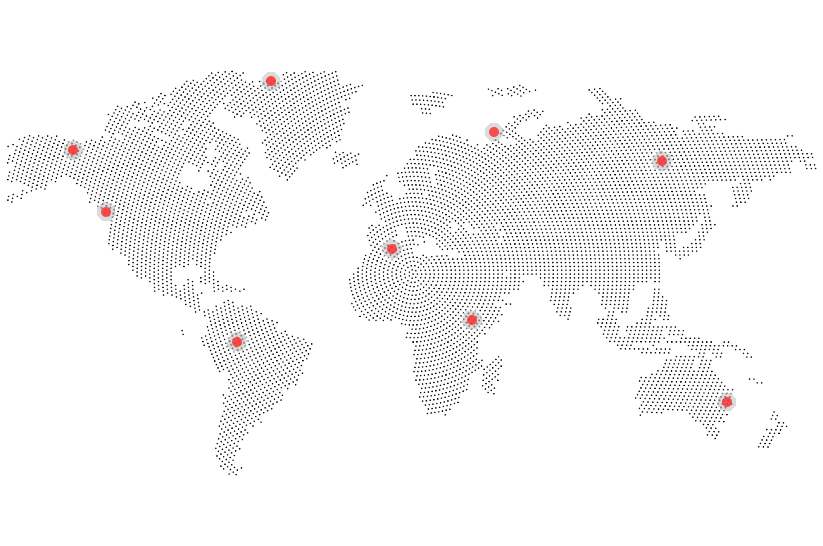
21 January 2026

Dubai has quietly become one of the most strategic sourcing hubs for essential oils in the global market. Not because it grows the raw botanicals, but because it sits at the intersection of trade, regulation, logistics, and quality aggregation. For brands and distributors, this creates both opportunity and risk.
This guide is written for decision-makers who are past the basics. If you are evaluating essential oils wholesale Dubai options and want clarity on supplier credibility, pricing logic, compliance realities, and long-term sourcing strategy, this article is meant to close that gap.
Dubai’s role in essential oil trade is not agricultural. It is infrastructural.
The city functions as a consolidation and redistribution center. Oils sourced from India, Madagascar, Bulgaria, Morocco, Australia, and Southeast Asia are tested, blended, stored, and exported through Dubai to Europe, the Middle East, Africa, and parts of Asia.
First, logistics efficiency. Dubai offers faster customs clearance, stable cold-chain infrastructure, and access to both air and sea freight. That directly affects oil freshness, oxidation risk, and lead times.
Second, regulatory positioning. Suppliers operating in Dubai often align with multiple compliance frameworks at once. This includes GCC standards, EU documentation readiness, and international cosmetic and wellness regulations.
Third, scale flexibility. Dubai supports small test orders alongside multi-ton bulk shipments. That is rare in producer countries, where minimum order quantities are often rigid.
Most buyers searching for Essential Oil Wholesale Suppliers in Dubai are not looking for a catalogue. They are trying to answer deeper questions.
Can this supplier scale with my brand?
Will their quality remain consistent across batches?
Are the documents reliable if I export to regulated markets?
Is the pricing logic sustainable or artificially low?
The challenge is that many suppliers look similar on the surface. Websites list hundreds of oils, certifications are mentioned without context, and origin claims are vague.
Rather than comparing suppliers oil by oil, use this five-layer evaluation model. It reflects how experienced buyers assess long-term partners.
Stating “Indian origin” or “Bulgarian lavender” is not enough.
Reliable suppliers can explain:
When suppliers cannot answer these questions clearly, it often signals trading behavior rather than sourcing expertise.
Essential oils are agricultural products. Variability is inevitable.
Trustworthy wholesalers acknowledge this and provide:
Suppliers who promise “identical oil every time” are often masking dilution or heavy standardization.
Climate control is critical in the Gulf.
Ask how oils are stored:
Poor storage can degrade oils faster than poor distillation.
Compliance is contextual.
A distributor selling to spas in the UAE needs different documentation than a brand exporting cosmetics to the EU.
Serious suppliers ask where you sell and tailor documentation accordingly, instead of offering generic certificates.
Low pricing often hides future instability.
Evaluate:
A stable partner values repeat business more than one-time margin extraction.
Most essential oils traded in Dubai are imported raw and processed or redistributed. This is not a drawback, but it requires buyers to understand origin traceability.
Certifications verify processes, not intent. Two suppliers with identical certificates can deliver vastly different oil integrity.
True wholesale pricing considers wastage, rejections, reformulation costs, and compliance risk. The cheapest oil often becomes the most expensive over time.
Dubai is ideal if:
Dubai may not be ideal if:
Understanding this distinction prevents costly mismatches.
Companies such as Ashwani LLC operate differently from catalogue resellers.
Their value lies in:
For brands and distributors, this model reduces operational friction and decision fatigue, especially during scale-up phases.
Buying essential oils wholesale is not a procurement task. It is a strategic decision that affects product quality, regulatory exposure, and brand credibility.
Dubai offers unique advantages, but only for buyers who approach it with the right evaluation lens. When supplier transparency, storage discipline, and commercial alignment are prioritized, Dubai becomes less of a marketplace and more of a long-term sourcing platform. The most successful brands are not the ones that find the cheapest oil. They are the ones that build relationships with suppliers who understand the full lifecycle of the product, from plant to shelf.
Dubai is reliable when suppliers are evaluated properly. Its strength lies in logistics, regulatory alignment, and trade infrastructure. Reliability depends on the supplier’s sourcing discipline and quality control, not the location alone.
Minimums vary widely. Some suppliers offer pilot quantities of 5 to 25 kilograms, while others focus on drum or tonnage orders. Serious wholesalers often adjust minimums based on relationship potential rather than rigid thresholds.
Per-kilogram prices can be higher, but total landed cost is often lower due to reduced freight complexity, fewer quality rejections, and consolidated documentation. Cost comparisons should always consider downstream risk.
Authenticity verification requires GC-MS analysis, organoleptic evaluation, and consistency checks across batches. Relying on certificates without technical interpretation is insufficient.
Many can, but capability varies. Custom blending requires formulation expertise, stability testing, and repeatability controls. Buyers should confirm whether blending is in-house or outsourced.
