


Our Global export market
We provide our services all over the world. Where we can serve you ?
Contact Us
11 April 2026
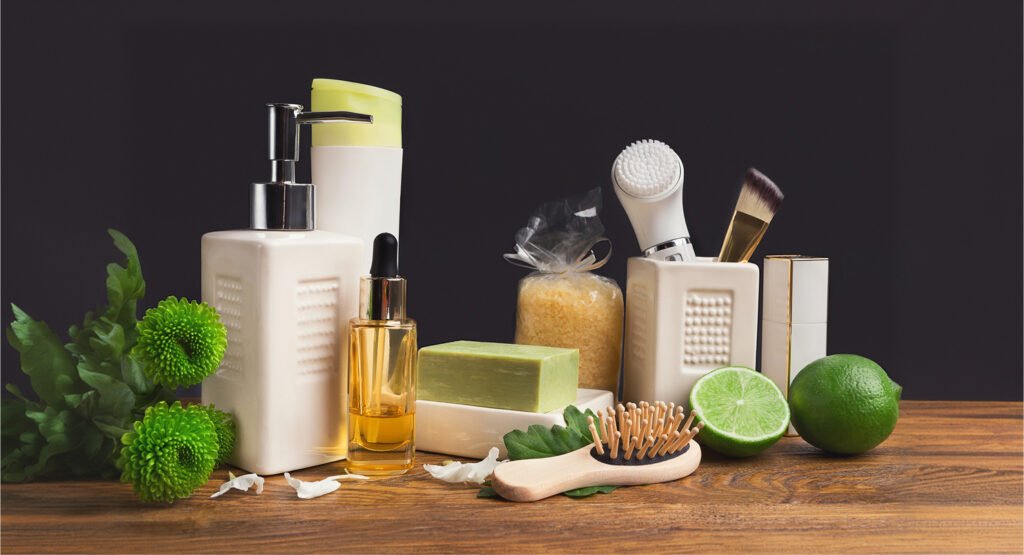
Most people searching for a natural bath and body product supplier in Dubai assume the process is straightforward: a factory mixes some oils, adds a fragrance, and packages it in a pretty bottle. That assumption costs brands money, time, and credibility. The real manufacturing process is far more layered, technically demanding, and strategically designed than what most buyers realize before they place their first order.
If you are building a beauty brand, scaling a retail line, or sourcing products for wholesale distribution, this guide will change how you evaluate manufacturers. You will learn exactly how credible Dubai-based manufacturers approach formulation, ingredient sourcing, regulatory compliance, scale production, and private labeling – all the factors that separate a product that sells from one that sits on a shelf. This is not a surface-level overview. It is a working understanding of how natural bath and body products in Dubai are actually made, at scale, without cutting corners.
Dubai’s rise as a cosmetics and personal care manufacturing hub is not accidental. It sits at a geographic intersection between major essential oil origins in South Asia, the Middle East’s aromatic heritage, and the regulatory infrastructure that global brands require. The UAE government has actively supported the cosmetics manufacturing sector through trade-friendly policies, free zone incentives, and export facilitation programs.
For buyers sourcing natural bath and body products specifically, Dubai offers a combination that is hard to replicate elsewhere. Manufacturers here have direct access to high-quality raw materials from India, North Africa, and Southeast Asia while simultaneously meeting European and Gulf Cooperation Council regulatory standards. This gives Dubai-based suppliers a competitive edge not just on price but on product quality, consistency, and documentation.
The natural and organic personal care market has grown significantly across the GCC region, driven by consumer demand for transparency, ingredient awareness, and skin-safe formulations. Dubai manufacturers have responded by investing in botanical extraction facilities, cold-process soap production lines, and advanced emulsification technology. Companies like Ashwani LLC have built infrastructure specifically to serve this demand, offering over 6,000 natural products to clients across 195 countries.
Dubai’s free zones play a direct role in enabling manufacturers to scale. By operating within trade-friendly environments, manufacturers can import raw botanical ingredients, process them without heavy customs friction, and export finished products to global markets efficiently. This matters for buyers because it directly affects lead times, MOQ flexibility, and the ability to ship both small pilot batches and large commercial volumes.
Manufacturers who operate as government-recognized export houses have an additional layer of credibility. Ashwani LLC holds Star Export House recognition, a designation that reflects verified export capacity, regulatory compliance, and institutional trust. For a buyer placing a large order, this status signals a level of seriousness that smaller or unverified suppliers cannot offer.
Formulation is where the real expertise separates good manufacturers from great ones. A natural bath and body product is not simply a combination of botanical ingredients. It is a carefully balanced system of active compounds, emulsifiers, preservatives, texture modifiers, and sensory elements that must perform consistently across batch sizes, temperature variations, and shelf life requirements.
The formulation process begins with defining the product’s purpose. A body lotion intended for dry skin rehabilitation has entirely different ingredient requirements than a bath soak designed for muscle recovery or a body scrub meant for exfoliation. Manufacturers with genuine formulation depth build separate product tracks for each category rather than adapting a single base formula across all applications.
Natural formulations specifically require deep knowledge of ingredient behavior. Botanical extracts, essential oils, and plant-based actives are inherently variable. The potency of a lavender essential oil differs based on its country of origin, extraction method, and harvest season. A skilled formulation team accounts for this variability by establishing acceptable ingredient specifications and testing each batch against those baselines before production begins.
The quality of any natural bath and body product is determined before a single drop of formula enters a mixing vessel. Ingredient sourcing is arguably the most important and most overlooked part of the manufacturing process. Manufacturers who own or have direct supplier relationships with raw material producers have a structural advantage over those who purchase from commodity traders.
Ashwani LLC sources pure and organic essential oils and carrier oils that form the core of most bath and body formulations. These include oils like argan, jojoba, rosehip, sweet almond, and a wide range of aromatic essential oils. Direct access to these raw materials at the source means quality control begins at origin, not after the ingredient arrives at the factory gate.
Key sourcing principles that credible natural product manufacturers follow:
When a manufacturer cannot provide this documentation, it is a significant risk signal regardless of how the products look or smell. Buyers should request these documents before committing to a production run, especially when natural or organic claims will appear on product labels.
One of the most valuable services Dubai manufacturers offer is custom formulation. This is the process of creating a product formula tailored specifically to a brand’s target audience, desired ingredient story, texture preferences, and price positioning. It is not a template selection exercise. It involves iterative development, lab testing, and sensory evaluation before a formula is approved for production.
Ashwani LLC’s custom formulation service works with clients to develop products that match the skin’s unique needs and align with the brand’s identity. This is especially important for brands entering markets where ingredient transparency is a purchasing driver. A custom formula gives a brand the ability to tell a specific, credible story about what is in their product and why.
The custom formulation process typically involves:
Moving a formula from laboratory prototype to thousands of units without quality loss is where manufacturing infrastructure becomes critical. This is a stage where many small or informal suppliers fail. The equipment, process controls, and quality management systems required to maintain formula integrity at scale are significant investments that only serious manufacturers make.
For bath and body products specifically, scale production involves multiple parallel manufacturing processes. Body lotions and creams require high-shear emulsification equipment that creates stable oil-and-water systems. Bath soaks and salts require blending systems that uniformly distribute essential oils across large volumes of mineral bases without separation. Body scrubs require careful mixing to preserve exfoliant particle integrity while ensuring even distribution of oils and active ingredients.
Temperature control is another critical variable. Many natural active ingredients degrade at elevated temperatures. A manufacturer who adds heat-sensitive botanical extracts before cooling the batch sufficiently will produce a product that meets appearance standards but fails on active ingredient performance. Proper batch records and in-process temperature logs are the documentation proof that this is being managed correctly.
A credible natural bath and body product supplier does not rely on visual inspection alone. They operate documented quality management systems that define acceptance criteria for every measurable parameter: pH, viscosity, color, microbial load, active compound concentration, and packaging seal integrity.
ISO 9001 certification is the international benchmark for quality management systems in manufacturing. Ashwani LLC holds ISO 9001 certification, which means its quality processes have been audited by an independent third party and found to meet internationally recognized standards. For a buyer, this is not just a credential. It is evidence that the manufacturer has invested in systematic quality management rather than relying on informal checks.
Quality control checkpoints at every stage of production include:
One of the most commercially significant services Dubai manufacturers provide is private labeling. This model allows brands of all sizes to launch natural bath and body product lines under their own name and branding without investing in manufacturing infrastructure, raw material procurement, or regulatory filing expertise.
Private labeling in the natural personal care category works differently from standard contract manufacturing. Because natural formulations involve more complex ingredient systems and more variable raw materials, the relationship between brand and manufacturer requires more communication and alignment than a standard white-label arrangement.
Ashwani LLC’s private labelling service covers the full production chain from formula to finished, labeled product. This includes formula selection or custom development, packaging specification, label design guidance, regulatory documentation for the target market, and bulk shipment to the client’s distribution point. For a brand launching in the UAE, Saudi Arabia, Europe, or any other major market, having a manufacturer who understands the regulatory requirements of that specific market is critical.
Packaging decisions for natural bath and body products carry more functional weight than many brands initially appreciate. Natural formulations are often more sensitive to light, oxygen, and contamination than synthetic alternatives. Packaging that protects formula integrity is therefore a performance requirement, not just an aesthetic one.
The right container depends on the formula type, target price point, and market positioning. Ashwani LLC’s packaging solutions include tubes, bottles, glass jars, and other container formats that meet both aesthetic and functional requirements. Glass is preferred for high-end oil-based products because it does not interact with the formula and creates a premium consumer experience. Airless pump bottles are ideal for water-based formulations that are vulnerable to oxidation. Tubes work well for scrubs and thicker creams where controlled dispensing improves the user experience.
Key packaging decisions that affect both product quality and brand performance:
One of the most practical concerns for buyers entering the natural bath and body category is how minimum order quantities (MOQs), pricing structures, and batch flexibility work with Dubai manufacturers. These factors directly determine whether a manufacturing partnership is viable for your business stage and growth trajectory.
Wholesale supply for natural bath and body products typically operates across two pricing models. The first is a standard wholesale model where the buyer selects from an existing product range and orders in defined batch sizes. The second is a custom formulation model where pricing reflects the development investment, ingredient costs, and production complexity of a purpose-built formula.
Ashwani LLC operates as a wholesale supplier offering bulk quantities from 25kg to 200kg and above, making it viable for both growing brands and large-scale distributors. The availability of bulk essential oils and carrier oils alongside finished bath and body products means buyers can source both raw materials and finished goods from a single relationship, which simplifies procurement and builds supply chain resilience.
For buyers evaluating batch flexibility, the key questions to ask any manufacturer are:
Regulatory compliance is an area where many brands underestimate complexity and overestimate their preparation. Natural and organic claims in personal care are not simply marketing decisions. They carry legal and regulatory weight in most developed markets, and a manufacturer who cannot support those claims with documentation puts the brand at risk.
In the UAE, cosmetics are regulated under the Gulf Cooperation Council (GCC) Cosmetics Technical Regulation, which requires product registration, ingredient compliance, and safety assessment. Manufacturers exporting to Europe must comply with the EU Cosmetics Regulation (EC) No 1223/2009, which has strict ingredient restriction lists and labeling requirements. The US market operates under FDA guidelines for cosmetics.
A Dubai manufacturer who understands these regulatory environments can be a significant asset to a brand expanding internationally. They can advise on which ingredients are restricted in specific markets, prepare the technical documentation required for product registration, and structure product labels to meet the requirements of multiple markets simultaneously. This is the kind of regulatory partnership that saves brands from costly reformulations or market entry delays.
Before approaching a manufacturer or placing an initial order, use this checklist to confirm your readiness. Gaps in preparation lead to delays, additional costs, and misaligned expectations.
Brand and Product Clarity
Operational Readiness
Supplier Evaluation
Growth Planning
Dubai’s natural bath and body manufacturing ecosystem is more sophisticated than its reputation suggests to outside buyers. The combination of direct access to global raw material sources, export-focused infrastructure, rigorous quality management systems, and genuine formulation expertise makes Dubai a credible and competitive choice for brands at every stage of growth.
The most important takeaway from this guide is that quality in natural personal care manufacturing is systemic, not accidental. It comes from ingredient sourcing practices, formulation depth, production controls, compliance infrastructure, and the experience to navigate all of them consistently. When you evaluate a natural bath and body product supplier, you are not just evaluating products. You are evaluating an entire system.
For brands and buyers who want to understand the full picture before committing, the right next step is to engage directly with a manufacturer, request documentation, and ask the specific questions this guide has outlined. Explore Ashwani LLC’s full product range and services to see what a scaled, certified, experience-backed natural product manufacturer looks like in practice.
A genuinely natural bath and body product is one where the active and functional ingredients are derived from plant, mineral, or other natural sources without synthetic chemical modification. This means plant-based oils, botanical extracts, natural mineral salts, and essential oils as the core components. It does not automatically mean the product is free from all processing or preservation. Most stable natural formulations require some form of preservation system. The distinction buyers should focus on is whether the preservation and functional ingredients are naturally derived or synthetic, and whether the brand’s claims are supported by ingredient documentation and third-party testing.
MOQs vary by manufacturer and product type. For wholesale bulk ingredients like essential oils and carrier oils, quantities typically start from 25kg per item. For finished private label products, MOQs depend on the formula type, packaging, and whether the product uses a stock formula or a custom development. Established manufacturers like Ashwani LLC offer flexibility across both wholesale bulk supply and smaller private label runs, making them accessible to growing brands at different stages of scale.
Custom formulation timelines depend on the complexity of the formula and the number of revision cycles required. A standard product like a body lotion or bath salt can move from initial brief to approved formula in four to eight weeks, assuming stability testing is conducted on an accelerated basis. More complex formulations or products requiring third-party regulatory approval may take longer. Buyers who have a clear brief and are responsive during the approval process typically move through development faster than those who iterate frequently or change the scope mid-development.
Yes, provided the manufacturer has the compliance infrastructure and regulatory knowledge to support export documentation. This includes ingredient compliance checks against restricted substance lists, safety assessments, and correctly structured product information files. Ashwani LLC exports to 195 countries, which reflects a working knowledge of diverse regulatory environments. Buyers should always specify their target market during the initial supplier conversation so that regulatory requirements are factored into formulation and labeling decisions from the outset.
At a minimum, request the following before placing a production order: ISO or equivalent quality management certification, Certificates of Analysis (COA) for key raw materials, Material Safety Data Sheets (MSDS) for all ingredients, stability test results for finished product formats similar to your requirement, and export documentation for your target market. A transparent manufacturer will provide these documents readily. Reluctance or inability to supply documentation is a meaningful risk signal regardless of product sample quality.
White label means you purchase an existing, pre-formulated product and apply your own branding to it. Private label means the product is manufactured and customized specifically for your brand, which may include formula modifications, custom fragrance blending, ingredient story alignment, or packaging design. Private label offers more brand differentiation because the product is not identical to what another brand might sell from the same manufacturer. For natural bath and body products where ingredient storytelling is a key purchase driver, private label typically delivers stronger brand equity and customer loyalty than white label.
