

Our Global export market
We provide our services all over the world. Where we can serve you ?
Contact Us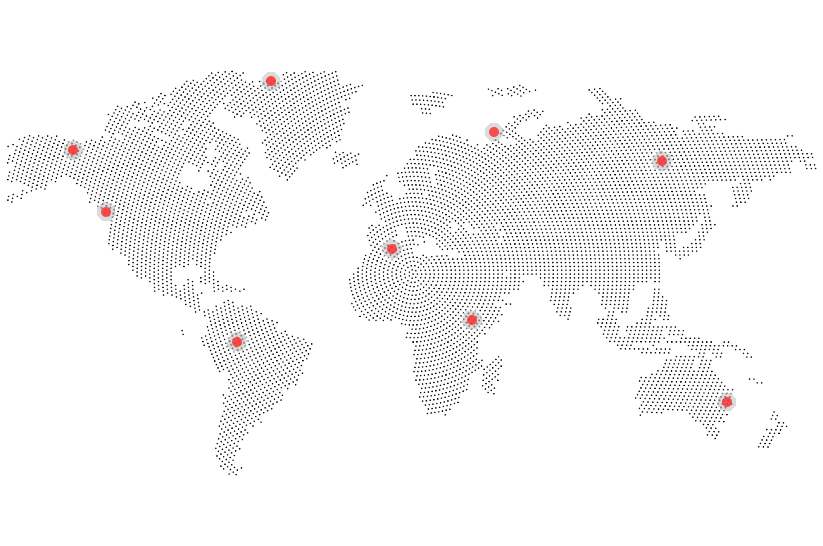
4 June 2026
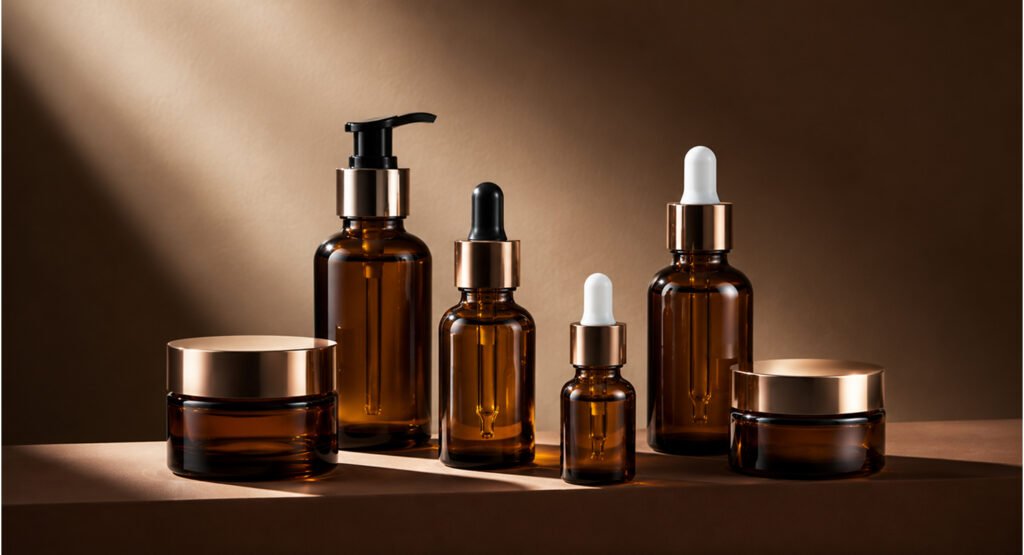
Here is a truth most packaging suppliers will not tell you: the jar or dropper bottle you choose affects far more than how your product looks on a shelf. It affects whether your formula stays chemically stable, whether your shipment clears customs smoothly, and whether your customer repurchases after the first use.
Brands operating in the UAE market face a particularly layered set of decisions. They are simultaneously sourcing for a premium-conscious local consumer, navigating import and labeling regulations, and often exporting products across GCC borders, all from the same production run.
This guide is written for cosmetic founders, product development managers, and procurement leads who are serious about getting packaging right. Whether you are building a serum line, a luxury facial oil collection, or a private-label skincare range, by the end of this article you will understand how to evaluate glass jar and dropper bottle suppliers in the UAE, what questions to ask, what mistakes to avoid, and how to make packaging decisions that serve your brand for years, not just your first production run.
The UAE has quietly become one of the most active cosmetic packaging hubs in the Middle East. Dubai in particular functions as a re-export corridor, meaning that many packaging suppliers operating here source from manufacturers in China, Europe, and India, but hold local stock, offer regional compliance support, and provide shorter lead times than dealing directly with overseas factories.
What this means for buyers is nuanced. You are rarely buying from a manufacturer when you work with a cosmetic packaging supplier in Dubai. You are buying from a distributor or trading company that has negotiated pricing, pre-cleared stock, and local service infrastructure. That is not a bad thing. But it changes how you should negotiate, what minimum order quantities to expect, and how you should plan for quality control.
There has also been meaningful growth in demand for glass packaging specifically. The premiumization trend in Gulf beauty, the rise of clean and conscious beauty brands targeting MENA consumers, and increasing scrutiny of plastic usage have all pushed glass jars and dropper bottles to the front of the packaging conversation.
One of the most common sourcing mistakes is treating glass jars and dropper bottles as purely aesthetic choices rather than functional ones. They are fundamentally different packaging formats, and confusing them leads to costly reformulation or repackaging decisions after your product has already launched.
Glass jars are wide-mouth containers designed for thick to medium viscosity formulas. Think face creams, body butters, hair masks, whipped cleansers, and solid balms. The wide opening allows finger or spatula application and makes the product feel accessible and generous in the hand.
From a packaging science standpoint, glass jars interact with air every single time they are opened. This makes them a poor choice for formulas that oxidize quickly, such as vitamin C serums or retinol products. If you are packaging an antioxidant-rich product in a glass jar, your formula needs either a high preservative load or airless-compatible stabilizers, and you need to brief your customers on usage hygiene.
The advantage of glass over plastic jars in the UAE climate is real and practical. Glass does not leach chemicals when temperatures rise, which matters enormously in a region where products can sit in a parked car or an unventilated bathroom for extended periods during summer months.
Dropper bottles, typically amber or clear glass with a rubber or silicone dropper pipette and a screw cap, are the correct format for serums, facial oils, beard oils, aromatherapy blends, and high-concentration actives. The narrow neck dramatically reduces surface area exposure to air, and the dropper mechanism controls dosage. That is both a functional benefit and a strong psychological premium signal to the consumer.
Amber glass specifically blocks UV light in the 280 to 450 nanometer range, making it standard for photosensitive formulas. If your formula contains retinoids, bakuchiol, essential oil blends, or fermented ingredients, amber glass dropper bottles are not optional. They are the correct technical choice, and using clear glass instead is a formulation stability risk.
The rubber bulb on most dropper pipettes deserves closer attention than most buyers give it. Low-quality rubber can leach compounds into formulas, especially high-alcohol or oil-based formulations. When sourcing in Dubai, always request material safety data or opt for suppliers offering TPE (thermoplastic elastomer) or silicone bulbs for sensitive or natural formulations.
If you are also sourcing the raw materials that go inside these bottles, reviewing the Pure and Organic product range from Ashwani LLC gives you a clear picture of what formulation-to-packaging compatibility looks like when both elements come from one trusted supplier.
Not all suppliers are equal, and the evaluation process matters more than the price negotiation. Here is a framework built from how serious cosmetic buyers actually vet their suppliers before committing to production orders.
This is the starting point. Does the supplier hold local stock in the UAE, or are they drop-shipping from overseas on your behalf? Local stock means shorter lead times, typically 3 to 10 business days, and gives you the ability to request physical samples before committing to a full production order.
Ask directly: Do you hold inventory in Dubai, or do you source to order? The answer to that one question changes your entire production planning timeline.
Many emerging brands in the UAE are launching with runs of 500 to 2,000 units. A supplier whose MOQ is 10,000 pieces per SKU is structurally incompatible with a startup or small-batch artisan brand, regardless of how good their glass quality is.
Understand what the MOQ is per SKU, per order, and whether there are mixed-SKU minimums available. Some packaging services in Dubai offer consolidated minimums, where you can mix bottle sizes or closure types to meet a combined threshold. This is significantly more useful for a brand with a multi-product range at launch.
This is where many Dubai-based buyers fall short. For the UAE market, cosmetic packaging must be compatible with products that will be registered with the UAE Ministry of Health or Dubai Municipality depending on product category. Some glass formulations or surface treatments can affect the chemical compatibility certification of your finished product.
Ask for: a Certificate of Analysis per batch, material composition declarations, and compliance with relevant international standards such as ISO 4706 for glass containers or equivalent. If the supplier cannot produce these documents on request, that is a meaningful red flag worth taking seriously.
Can this supplier offer frosting, screen printing, hot stamping, or embossing? What is their internal capability versus what they outsource to third parties? Understanding this matters because each handoff in a supply chain is a point of potential delay, miscommunication, or quality inconsistency that eventually lands at your door.
This is a topic most buyer guides skip entirely, and it is one of the most practically important things to understand when sourcing in a market as varied as Dubai.
Glass quality in packaging is primarily determined by three variables: wall consistency, clarity and bubble presence, and surface finish uniformity.
Wall consistency refers to how evenly the glass is distributed around the circumference of a jar or bottle. Inconsistent walls create weak points where thermal stress, particularly relevant in UAE summers, can cause fractures during shipping or consumer use. Run your finger around the interior of a sample jar. It should feel uniformly smooth with no obvious thick or thin sections.
Clarity matters most for clear glass applications where the formula itself is part of the visual presentation, such as golden facial oils or tinted moisturizers. Low-grade glass often contains micro-bubbles or a slight green tint from iron impurities in the silica used during manufacturing. Premium glass, often referred to as Type III pharmaceutical-grade flint glass in cosmetics, has exceptional clarity and a neutral tone that showcases the product inside.
Surface finish determines how well decoration adheres and how the packaging performs in retail environments or product photography. Uneven surfaces cause screen-printed labels to shift during curing, hot stamp foils to flake at edges, and even pressure-sensitive labels to bubble over time. When sampling from any supplier, photograph the empty glass under natural side lighting. Bubbles, streaks, and surface irregularities become visible immediately under these conditions.
A glass jar or dropper bottle is a system, not a standalone component. The closure is equally important and is frequently sourced separately from the glass, which creates a compatibility responsibility that falls entirely to the buyer.
For glass jars, the key closure variables are thread finish measured in millimeters, such as 58/400 or 89/400, torque requirements, and inner liner material. Liners must be chemically compatible with the formula they contact. An aluminum-lined cap is inappropriate for acidic formulas, as it will corrode over time and contaminate the product. This is the kind of failure that leads to product recalls, damaged brand reputation, and unhappy customers, all of which are avoidable with one question to your supplier at the start.
For dropper bottles, the dropper assembly, which includes the cap, collar, bulb, and pipette tube, must be matched precisely to the neck finish of the bottle. A 18/415 neck finish requires a corresponding 18mm dropper assembly. This sounds obvious, but mismatches are surprisingly common when glass and closures are sourced from different vendors, which happens frequently in the Dubai distribution market.
When reviewing your supplier relationship, ask specifically whether glass and closures are sold as matched systems that have been tested together, or whether sourcing them separately makes compatibility your responsibility. This one question can save weeks of delay and hundreds of wasted sample units.
For brands building their cosmetic range from scratch, there is a significant advantage to working with a supplier that understands both the product inside the bottle and the bottle itself. When packaging and formulation come from disconnected sources, the risk of incompatibility, missed compliance requirements, and production delays multiplies.
Ashwani LLC operates as both a formulation and packaging service provider in Dubai, which means the chemical compatibility between your serum formula and your chosen dropper bottle can be reviewed as a unified decision rather than two separate procurement conversations. This matters especially for oil-based serums, essential oil blends, and botanical facial oils, which are among the fastest-growing product categories in the Gulf beauty market.
If you are building a private label cosmetic brand in the region, the Private Labelling service offered by Ashwani LLC connects packaging selection directly to product development, giving you a shorter path from concept to shelf-ready product.
Brands that are scaling beyond launch and need a reliable sourcing partner for both ingredients and containers can also explore the Wholesale Supplier channel, which provides more flexible volume structures for established brands managing multiple SKUs.
For those building bath and body care lines that require glass packaging for scrubs, oils, or body serums, the Bath and Body Care product range gives useful context on how packaging format aligns with specific product types in that category.
One of the most valuable things you can bring to a supplier conversation is a clear, written packaging brief. Most buyers arrive with a vague idea of what they want and rely on the supplier to interpret their needs, which leads to misaligned samples, multiple rounds of revision, and wasted time for both parties.
Here is what a complete packaging brief should include before you approach any supplier:
Product Information: Formula type, viscosity range, key actives, pH level, and any known material sensitivities such as alcohol content, essential oil percentage, or acidity.
Packaging Specification: Container type (jar or dropper), approximate volume in ml, preferred glass color (clear, amber, frosted), neck finish if known, and closure type and material preference.
Quantity and Timeline: Expected initial order quantity, anticipated reorder frequency, and target delivery date for first production run.
Decoration Requirements: Label application method (pressure-sensitive label, direct printing, or shrink sleeve), required surface area for labeling, and any embossing or frosting requirements tied to brand identity.
Compliance Context: Markets where the product will be sold, relevant regulatory standards the packaging must support, and language requirements for labeling panels including Arabic requirements for UAE distribution.
Budget Parameters: Per-unit target price range and acceptable premium for quality upgrades such as PCR glass or premium closures.
Presenting this information upfront transforms supplier conversations from exploratory to evaluative, and it signals that you are a serious buyer worth prioritizing. Suppliers allocate their best inventory and service attention to buyers who arrive prepared.
The brands that build lasting positions in the UAE cosmetic market treat packaging with the same seriousness they give to formula development. The jar or bottle you choose communicates your brand values, protects the integrity of your formula through the realities of the regional climate and distribution chain, and ultimately determines whether your customer picks up the product again.
Working with a knowledgeable cosmetic packaging supplier in Dubai, one who understands local compliance, regional consumer expectations, and the functional requirements of different product formats, gives you a meaningful competitive advantage over brands that treat packaging as a last-minute procurement task.
The framework in this guide, from understanding glass quality variables to building a complete packaging brief to knowing which questions to ask a supplier before committing, equips you to make sourcing decisions that support both your launch and your long-term brand growth.
Take the time to sample thoroughly, ask the technical questions, and align your packaging selection with your formula and your target market. If you are ready to explore packaging options or discuss your specific product requirements with a Dubai-based supplier, you can contact Ashwani LLC directly to start the conversation.
This varies significantly by supplier type and product. Some distributors holding local stock in Dubai offer minimums as low as 100 to 500 units per SKU for standard catalog items. Custom or decorated orders typically start at 1,000 to 3,000 units. If your volume is below 500 units, look for suppliers who offer consolidated minimums across multiple SKUs or who specifically serve small-batch cosmetic brands. Asking about mixed-SKU minimums is always worthwhile before assuming a supplier’s MOQ is a hard limit.
Amber glass is necessary when your formula contains photosensitive ingredients, including most essential oils, retinoids, vitamin C derivatives, and fermented actives. For stable, non-photosensitive formulas, clear glass is acceptable and is often preferable for visual merchandising where the product color or texture is part of the brand story. When in doubt, conduct accelerated stability testing under light exposure with your specific formula to confirm whether UV protection is genuinely required.
Ask to visit their warehouse or request a short video walkthrough of their inventory area. Ask how quickly they can ship a physical sample to your address. Same-day or next-day sample availability strongly suggests genuine local stock. Also ask directly what their standard delivery lead time is for catalog items. Anything beyond two weeks for an undecorated standard item typically indicates overseas sourcing rather than local inventory.
Request a Certificate of Analysis for each glass batch, confirming chemical composition and dimensional tolerances. For products targeting EU export, ask about compliance with EU Regulation No. 10/2011 for any plastic components involved, and relevant ISO standards for glass containers. For the UAE market specifically, confirm that packaging dimensions support the bilingual labeling requirements under UAE.S 04/2022, which mandates Arabic language inclusion on all cosmetic products sold domestically.
The glass itself is chemically inert and compatible with virtually all cosmetic formulas. The variable is the dropper assembly, specifically the bulb material and inner pipette coating. Rubber bulbs can swell or degrade in high-oil or high-alcohol environments over time, leading to leakage or contamination. Always confirm bulb material compatibility with your specific formula before finalizing a dropper bottle for use across multiple formula types.
Type I is borosilicate glass with the highest chemical resistance, typically used in pharmaceutical injectables and premium cosmetic actives. Type II is treated soda-lime glass with improved chemical resistance, often used in water-based pharmaceutical products. Type III is standard soda-lime glass and is the most common grade used in cosmetic packaging globally. For most cosmetic applications including serums, facial oils, and creams, Type III is appropriate and cost-effective. Type I is only warranted for highly active, pH-extreme, or pharmaceutical-grade formulations where the additional cost is justified by stability requirements.
For raw, undecorated catalog glass, plan for 3 to 10 business days if the supplier holds local stock. For frosted glass, add 2 to 3 weeks. For screen-printed or hot-stamped glass, add 4 to 6 weeks from artwork approval. For fully custom-molded glass with a proprietary bottle shape, lead times range from 90 to 150 days including mold development and typically require minimum orders of 5,000 to 10,000 units. Always build a buffer of at least two weeks into any decorated glass timeline for quality inspection and potential rework before your final delivery date.
