

Our Global export market
We provide our services all over the world. Where we can serve you ?
Contact Us
26 August 2026
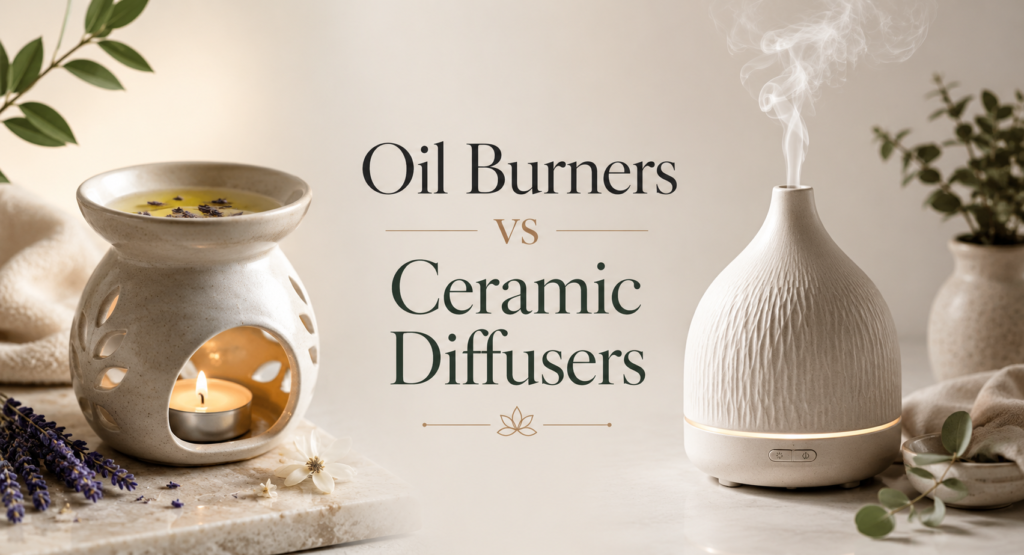
Choosing the right fragrance accessory can make a significant difference in how essential oils and home fragrances are experienced. With so many options available, Oil burners vs Ceramic Diffusers is an important comparison for homeowners, wellness businesses, spas, retailers, and brands developing their own aromatherapy collections.
Both products can add fragrance and decorative appeal to an environment, but they work in different ways. Oil burners commonly rely on heat, often from a candle, while ceramic diffusers can use passive evaporation or other diffusion methods depending on their design. Their differences can affect fragrance intensity, maintenance, safety, aesthetics, and overall usability.
For businesses, the choice also extends beyond the product itself. Factors such as private labelling, packaging & bath and body care, product customization, quality, and sourcing from a reliable wholesale supplier can influence how successfully these products fit into a growing fragrance or wellness range.
An oil burner is a decorative fragrance accessory designed to release the aroma of essential oils or fragrance oils into the surrounding area. Traditional oil burners are commonly made from ceramic and feature a small reservoir at the top with a space underneath for a tea light candle.
To use one, water and a suitable amount of essential or fragrance oil are generally placed in the upper dish. When the candle is lit, the heat warms the mixture and helps the aroma disperse through the surrounding space.
Oil burners are popular because they combine fragrance with the visual warmth of candlelight. Decorative designs can also make them attractive additions to bedrooms, living rooms, spas, boutiques, and wellness environments.
However, because traditional oil burners involve an open flame, they require careful placement and supervision during use.
The operating principle of a traditional oil burner is relatively simple. The candle produces heat underneath the reservoir, warming the water and aromatic oil mixture above it. As the mixture warms, volatile aromatic compounds are released into the surrounding air.
A typical process involves:
Always follow the product manufacturer’s instructions. The reservoir should not be allowed to boil dry, and a lit oil burner should never be left unattended.
A ceramic diffuser is an aromatherapy or home-fragrance product made partially or primarily from ceramic. Depending on the design, it may work through passive evaporation, absorb fragrance into a porous ceramic surface, or incorporate another diffusion mechanism.
Passive ceramic diffusers are particularly simple. Fragrance or essential oil is applied to the designated ceramic surface, where it can gradually evaporate and release aroma into the surrounding environment.
Because many passive ceramic diffusers do not require a candle, water, or electrical connection, they can offer a convenient option for desks, bedrooms, bathrooms, reception areas, wardrobes, and smaller wellness spaces.
Their decorative finish is another advantage. Ceramic can be shaped, textured, glazed, or finished in different styles, allowing fragrance products to become part of a brand’s interior aesthetic.
The working process depends on the specific product. In passive designs, porous ceramic material absorbs or holds the aromatic oil. The oil then gradually evaporates from the surface, releasing fragrance into the surrounding air.
These diffusers generally provide a more subtle fragrance experience than systems specifically designed for active dispersal. This makes them useful when a gentle background aroma is preferred rather than a strong fragrance throughout a large room.
Users should apply only the amount of oil recommended by the manufacturer and clean reusable products as directed to prevent excessive residue and fragrance buildup.
When comparing Oil Burners vs Ceramic Diffusers, the most important differences involve heat, operation, fragrance release, maintenance, and safety.
| Feature | Oil Burners | Ceramic Diffusers |
| Operating method | Commonly use candle heat to warm a fragrance mixture | Often rely on passive evaporation, depending on design |
| Heat requirement | Usually requires heat | Passive models generally do not require heat |
| Open flame | Traditional models use a candle flame | Passive models do not require an open flame |
| Fragrance experience | Can create a noticeable and warm fragrance ambience | Often provides a subtle, gradual aroma |
| Water | Many traditional designs use water with oils | Passive designs generally do not require water |
| Maintenance | Reservoir needs regular cleaning | Ceramic surface may need cleaning between fragrances |
| Portability | Easy to move but requires candle setup | Passive models are generally very simple to position |
| Decorative appeal | Available in many traditional and artistic designs | Often designed as decorative home and lifestyle products |
| Best use | Candlelit ambience and traditional fragrance experiences | Subtle, flame-free fragrance applications |
The exact performance varies between products, so buyers should always review the manufacturer’s specifications before choosing a particular model.
Proper use is essential because traditional oil burners use heat and an open flame.
Place the burner on a stable, heat-resistant surface away from curtains, paper, furniture, children, pets, and other flammable items. Add the appropriate amount of water and fragrance material according to the manufacturer’s directions, then position the tea light correctly.
Do not leave the burner unattended. Avoid touching the burner immediately after use because the ceramic and surrounding components can become hot. Allow the product to cool before moving or cleaning it.
Using excessive oil or allowing the reservoir to become empty while heated can also create avoidable problems. Following the instructions supplied with the specific burner is the safest approach.
Using a passive ceramic diffuser is generally straightforward. Apply the recommended quantity of essential or fragrance oil to the designated ceramic area and place the diffuser somewhere with suitable airflow.
For a better fragrance experience, avoid overcrowding the diffuser with other strong scents. When changing from one fragrance to another, clean the product according to its care instructions to reduce residual fragrance mixing.
Ceramic diffusers are particularly useful in locations where an open flame is undesirable. Their compact and decorative nature also makes them suitable for hospitality settings, offices, treatment rooms, retail environments, and home interiors.
There is no universal winner in the Oil Burners vs Ceramic Diffusers comparison. The better option depends on the desired fragrance experience and intended environment.
An oil burner may appeal to users who enjoy the traditional combination of fragrance and candlelight. It can create a warm visual ambience in areas where an open flame can be managed safely.
A ceramic diffuser may be more suitable for users who prefer a simpler and flame-free approach. Passive ceramic designs can provide gentle fragrance without requiring a candle or electrical power.
When selecting between the two, consider the space, desired fragrance strength, maintenance requirements, operating conditions, and safety considerations.
Spas, salons, and wellness businesses often need fragrance products that complement the customer experience without creating unnecessary operational challenges.
Ceramic diffusers can be particularly suitable for reception desks, treatment rooms, consultation areas, and smaller spaces where subtle fragrance is desirable. Their decorative appearance can also support premium, natural, minimalist, or wellness-oriented interior themes.
Oil burners can be appropriate when candlelight and traditional aromatherapy aesthetics are intentionally incorporated into the environment. However, businesses using open-flame products must establish appropriate safety practices and ensure that staff supervise their operation.
For many commercial settings, the choice should be based on customer comfort, room size, operating hours, fragrance preferences, maintenance, and safety rather than appearance alone.
Think about whether you want a subtle background aroma or a more noticeable fragrance experience. Room size and ventilation can also influence how fragrance is perceived.
A traditional oil burner involves heat and an open flame, while passive ceramic diffusers generally eliminate those requirements. Commercial spaces should take their operating environment into account.
Oil burners usually require the reservoir to be emptied and cleaned regularly. Ceramic diffusers also need appropriate care, especially when different oils or fragrances are used.
Both categories offer decorative options. Consider how the product will complement your room, brand identity, or customer experience.
A product intended for occasional home use may have different requirements from one used regularly in a spa, salon, hotel, or retail environment.
For businesses, material quality, finish consistency, packaging, customization, and reliable supply can be just as important as the product’s appearance.
Oil burners offer several qualities that make them popular in traditional aromatherapy and home-fragrance applications.
Their candlelight can create a relaxing visual atmosphere while fragrance is released. They are available in numerous ceramic shapes and decorative styles, giving retailers and hospitality businesses plenty of presentation options.
For brands, distinctive designs can also create opportunities for customized product collections, coordinated packaging, and seasonal fragrance ranges.
Ceramic diffusers offer a simple and decorative fragrance solution, particularly when passive fragrance release is preferred.
Their flame-free operation in passive models can make them convenient for areas where candles are unsuitable. Ceramic construction also provides opportunities for different shapes, textures, colors, finishes, and branded designs.
For lifestyle and wellness businesses, these qualities can help create a product line that combines function with visual appeal.
The growing popularity of home fragrance has created demand for products that are both functional and attractive. Oil burners can suit consumers who enjoy traditional candle-based fragrance rituals, while ceramic diffusers can appeal to customers looking for minimal, decorative, and easy-to-use alternatives.
For retailers, offering both products can be an effective way to serve different customer preferences. Complementary fragrances, essential oils, gift sets, and accessories can further expand the product range.
Businesses can also pair fragrance products with complementary bath and body care collections to create a broader lifestyle and wellness offering.
Ashwani LLC helps businesses explore opportunities across fragrance, wellness, personal care, and lifestyle product categories. For brands looking to build a distinctive collection, sourcing products such as oil burners, ceramic diffusers, essential oils, packaging solutions, and complementary bath and body care products can create a more complete customer offering.
Through private-label and wholesale-oriented solutions, businesses can develop collections that align with their preferred branding, packaging, target market, and product positioning.
Whether the goal is to create a premium home-fragrance range, expand an existing wellness catalogue, or develop a private-label personal care brand, choosing the right products and sourcing partner is an important part of building long-term market value.
More oil does not necessarily mean a better fragrance experience. Follow the product’s recommended usage instructions.
Never leave a candle-based oil burner unattended. Keep heat and flames away from combustible materials.
Residual oils can affect the aroma of a new fragrance. Clean reusable products according to their care instructions.
A beautiful design is valuable, but product function, safety, quality, maintenance, and durability should also influence the purchasing decision.
For businesses, poor packaging can weaken an otherwise good product. Consider presentation and protection as part of the overall product strategy.
Understanding the differences between Oil Burners vs Ceramic Diffusers makes it easier to choose a product that matches your fragrance goals, environment, and customer expectations. Oil burners offer a traditional, candle-based fragrance experience, while passive ceramic diffusers provide a simpler and generally flame-free alternative.
For consumers, the decision can come down to ambience, convenience, fragrance intensity, maintenance, and safety. For retailers and growing wellness brands, additional considerations such as product design, private labelling, packaging & bath and body care, and dependable wholesale sourcing can influence the long-term success of a product line.
With the right product strategy and a reliable wholesale supplier, oil burners and ceramic diffusers can become valuable additions to a broader home-fragrance, aromatherapy, wellness, or personal-care collection.
No. Although both can be used for fragrance, traditional oil burners generally use heat to release aroma, while many ceramic diffusers use passive evaporation or another diffusion method.
A passive ceramic diffuser generally avoids the open flame associated with traditional oil burners. However, safety depends on the specific product and how it is used. Always follow the manufacturer’s instructions.
For a passive ceramic diffuser, apply the recommended amount of essential oil to the designated ceramic surface and place it in a suitable location. Follow the product’s care and usage instructions.
Oil burners typically use heat, often from a tea light candle, to release fragrance, while many ceramic diffusers use passive evaporation to gradually disperse essential oil aromas. The exact operation depends on the product design.
Neither is universally better. Ceramic diffusers can be preferable for flame-free, subtle fragrance, while oil burners may suit people who enjoy candlelight and a traditional fragrance experience.
Some oil burners are designed for essential oils, while others may be intended for fragrance oils or specific oil-and-water combinations. Check the manufacturer’s recommendations before use.
Fragrance duration varies depending on the ceramic material, oil used, quantity applied, airflow, temperature, and room conditions. Passive diffusers generally provide gradual rather than continuous high-intensity fragrance.
Passive ceramic diffusers generally do not require electricity. However, some ceramic diffuser products may incorporate electrical or other active diffusion systems, so always check the product specifications.
They can be used where open flames are permitted and properly supervised. Businesses should assess their operating environment and prioritize fire safety and customer comfort.
Ashwani LLC can be a valuable sourcing partner for businesses seeking product variety, private-label opportunities, packaging support, and solutions across fragrance, wellness, cosmetics, and bath and body care categories.
