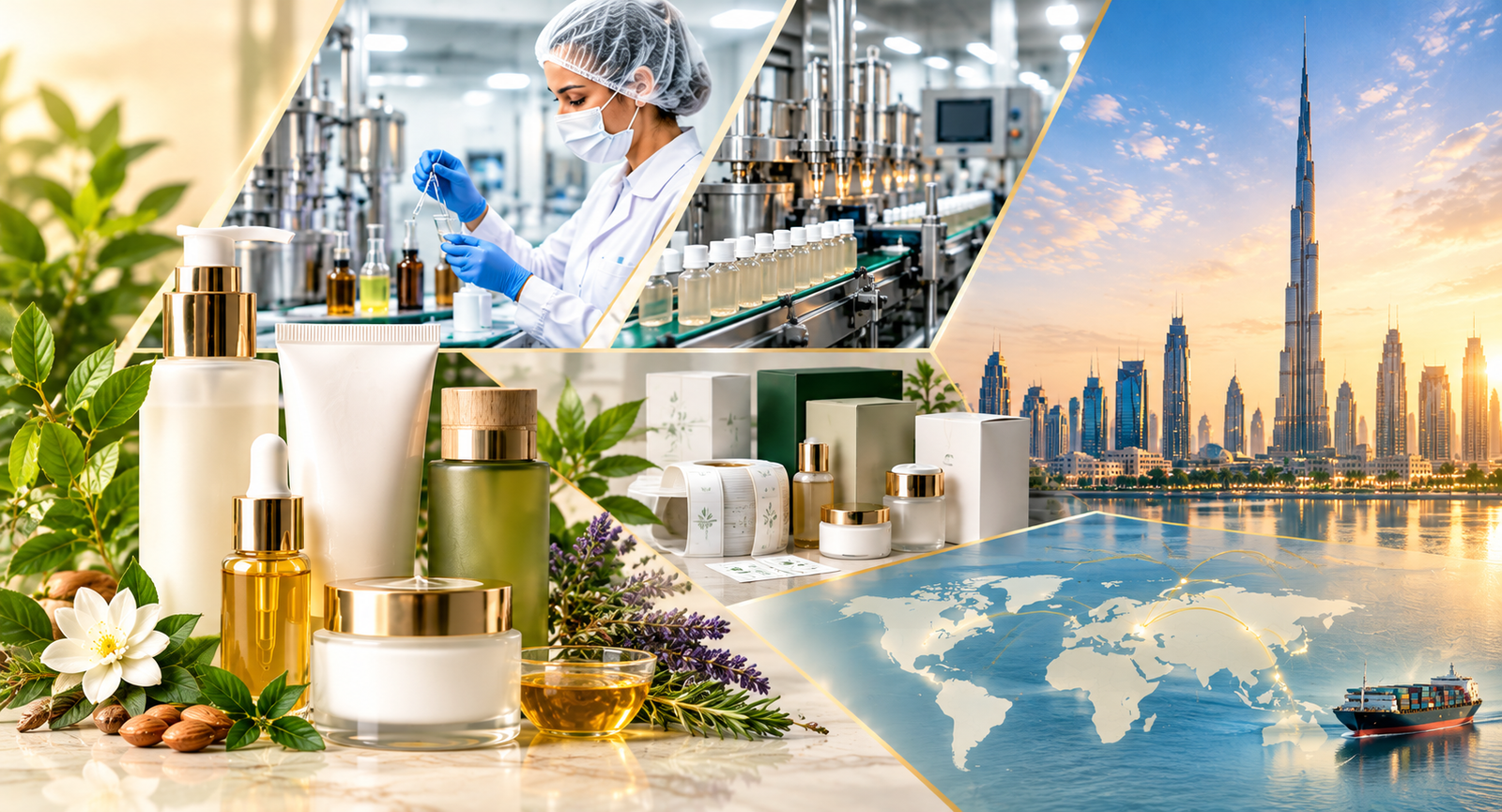


Our Global export market
We provide our services all over the world. Where we can serve you ?
Contact Us
26 September 2026
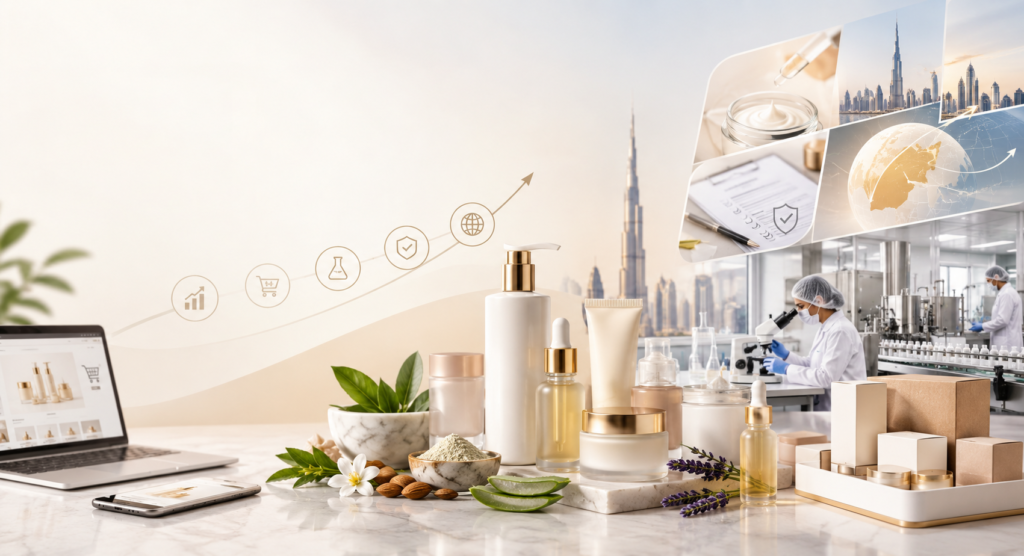
The global beauty landscape has undergone a profound structural shift. Heritage conglomerates no longer hold an exclusive monopoly over retail distribution, as agile, independent brands continue to capture substantial consumer loyalty. For beauty entrepreneurs, spa networks, and corporate investors, this decentralized supply chain presents a highly lucrative entry point.
Recent market intelligence confirms this trajectory: after closing out 2025 with a global valuation of USD 11.41 Billion, the private label cosmetics sector is projected to expand from USD 12.02 Billion in 2026 to USD 18.13 Billion by 2034. Registering a steady compound annual growth rate (CAGR) of 5.28%, this expansion proves that the independent beauty movement has evolved from a transient trend into a permanent market architecture.
At the geographic heart of this business transformation lies the United Arab Emirates (UAE). Positioned as a strategic gateway linking raw material sources in the East with high-spending consumer bases in the West, the UAE—particularly across dedicated industrial zones in Dubai and Abu Dhabi—has emerged as a premier global hub for premium B2B cosmetic contract manufacturing and turnkey packaging solutions.
To effectively capitalize on this expanding market, businesses must analyze the underlying operational frameworks accelerating the industry’s multi-billion-dollar valuation.
Launching a premium cosmetic brand historically required prohibitive upfront capital expenditure, dedicated laboratory space, and multi-year stability trials. Modern B2B contract manufacturers have dismantled these entry barriers by offering end-to-end turnkey manufacturing. By consolidating custom research and development (R&D), ingredient sourcing, regulatory clearance, primary container selection, and final box packaging under a single operational roof, manufacturers allow brand owners to focus resources exclusively on customer acquisition and brand equity.
Modern beauty consumption is dictated by digital ecosystems, rapid algorithm shifts, and micro-influencer recommendations. When a specific skincare active or product format captures global attention online, an agile brand utilizing private label infrastructure can engineer, validate, and launch a fully compliant product line within months. Legacy beauty brands, restricted by corporate layers and rigid manufacturing schedules, frequently require an 18-to-24-month development cycle, leaving them trailing behind consumer demand.
Capital allocation within the GCC beauty sector requires a granular understanding of which product categories show the highest consumer velocity and resilience.
Skincare maintains the largest market share and the fastest growth curve within the private label sector. This dominance stems from a long-term consumer transition from temporary color correction to skin health, barrier repair, and clinical ingredient transparency.
In the Middle East, extreme environmental factors accelerate this demand. High ambient temperatures, elevated UV indexes, and prolonged exposure to air-conditioned interiors create specialized dermatological requirements. Forward-thinking brands are capitalizing on this by partnering with local factories to engineer targeted solutions, including:
The color cosmetics market relies heavily on visual differentiation and high aesthetic appeal. However, the modern market demands more than strong color payoffs. The highest growth is concentrated in hybrid color cosmetics—products that fuse makeup with active skincare benefits, such as tinted serums infused with hyaluronic acid, or nourishing lip oils replacing traditional synthetic glosses. For the UAE market, formulations must be explicitly engineered for long-wear, climate-resilient performance to withstand high humidity environments.
The haircare segment is undergoing a structural transformation often called the “skinification” of hair. Consumers increasingly treat their scalp with the same ingredient-led complexity once reserved for facial care. High-performing private label lines are focusing heavily on scalp health, introducing specialized products like salicylic acid exfoliating scrubs, rosemary leaf extract oils, and peptide-infused hair density serums.
While historically dominated by European luxury houses, the fragrance sector has seen an influx of independent, direct-to-consumer players. The UAE is uniquely positioned to lead this segment due to its deep cultural affinity for complex, premium perfumery. Local B2B manufacturers now provide highly sophisticated fragrance development pipelines, allowing boutique brands to pair traditional regional elements—such as premium oud, amber, and frankincense—with modern, minimalist packaging formats.
The decision between natural and synthetic formulations directly impacts a brand’s target demographics, manufacturing costs, and regulatory pathways.
The organic and natural product segment is projected to grow at a faster rate than conventional synthetics through 2034. Consumer demand for clean formulas is no longer a niche preference; it is a primary market requirement. This shift is driven by buyers carefully scrutinizing ingredient lists for parabens, sulfates, and petrochemical derivatives.
For the UAE and broader GCC markets, the clean beauty movement aligns perfectly with the requirements for Halal certification. Modern consumers increasingly view product purity, cruelty-free testing, and clean ingredient sourcing as natural extensions of ethical, Halal-compliant lifestyles. When a brand partners with a manufacturing facility that maintains certified cleanrooms and audited supply chains free from forbidden animal derivatives, it unlocks a highly lucrative consumer market across the Middle East and Southeast Asia.
The distribution landscape has evolved from traditional department store reliance into a complex, digital-first omni-channel ecosystem.
The rapid expansion of regional platforms like Noon and Amazon.ae, combined with integrated social commerce features, has democratized retail access. Independent brands can now bypass legacy distributor fees, launch via targeted e-commerce strategies, and manage inventory dynamically based on real-time consumer data.
A high-margin distribution channel often overlooked by new brands is the institutional B2B sector. Premium wellness centers, medical spas, and luxury salon networks throughout the UAE are actively launching proprietary house brands. By collaborating with turnkey manufacturers, these businesses can introduce exclusive, branded treatment products, enhancing institutional prestige while establishing reliable secondary revenue streams from a captured, loyal audience.
Successfully scaling a cosmetics business in the UAE requires a practical understanding of local operational and regulatory frameworks.
For manufacturing facilities and chemical suppliers looking to secure corporate accounts, content marketing must move beyond basic product catalogs. B2B decision-makers respond to high-utility educational resources that actively reduce their operational risks.
Publishing granular, step-by-step guides on navigating regional compliance—such as “The Executive Guide to Navigating the Dubai Municipality Montaji System”—attracts serious, high-intent brand owners who are actively preparing for production.
Given the region’s intense climate, publishing technical data on formulation stability under accelerated thermal stress tests builds immediate professional trust. Demonstrating how natural active ingredients or eco-friendly packaging materials (such as Post-Consumer Recycled plastics) perform during high-speed automated filling lines establishes a manufacturer’s technical authority.
As the regional landscape scales toward the 2034 projection, navigating the complexities of production requires more than a standard factory floor—it demands a strategic operational partner. Ashwani LLC has established itself as a premier force in the UAE’s B2B beauty manufacturing sector, bridging the gap between abstract brand concepts and retail-ready cosmetic portfolios.
Ashwani LLC eliminates the fragmented supply chain friction that frequently stalls beauty startups. By acting as a single point of structural accountability, they absorb the technical burdens of product development. They assist brands by providing:
The operational model at Ashwani LLC relies on unified precision. Instead of requiring brand owners to coordinate between independent chemical laboratories, compliance consultants, and packaging factories, Ashwani LLC manages the entire lifecycle in-house. Their process begins with rigorous R&D formulation, moves through rigorous thermal and microbial stability testing, and concludes with automated filling and turnkey packaging assembly. This centralized workflow ensures that final formulations perfectly match their containment mechanisms, eliminating leaks, chemical separation, or pump failures before retail distribution.
In a high-velocity market projected to hit USD 18.13 Billion, execution errors carry high financial penalties. A partner like Ashwani LLC is crucial for safeguarding capital preservation and brand reputation. Their deep familiarity with regional distribution challenges allows independent founders to sidestep high upfront capital barriers, minimize inventory waste, and deploy premium product lines that confidently compete with heritage global conglomerates.
The trajectory of the beauty industry from 2026 to 2034 is defined by speed, product transparency, and operational agility. As the global private label market advances toward its USD 18.13 Billion forecast, the long-term viability of independent brands will depend heavily on the strength and efficiency of their manufacturing supply chains.
For businesses operating within the GCC, long-term success requires moving away from fragmented, multi-vendor production setups. The path forward demands an integrated approach, utilizing turnkey B2B manufacturing solutions that unify advanced product R&D with high-end, sustainable packaging. By aligning product development with verified regional demands—and partnering with established sector leaders like Ashwani LLC—emerging beauty brands can minimize initial capital risks and build highly valuable, sustainable businesses capable of competing globally.
The turnkey process is a complete end-to-end manufacturing solution. Instead of managing multiple suppliers, you work with Ashwani LLC as a single partner. They handle custom product development in the lab, ingredient sourcing, container compatibility screening, bulk manufacturing, product filling, and final retail boxing. Your product is delivered fully shelf-ready.
The market’s projected growth from USD 12.02 Billion to USD 18.13 Billion indicates a permanent structural shift in consumer behavior toward niche, indie, and specialized brands. This multi-billion-dollar expansion creates a sustainable commercial window, making it easier for new entrants to capture market share from legacy corporations.
Traditional international factories often require high upfront quantities that can strain capital. Ashwani LLC offers flexible, tiered production scaling. This allows emerging brands and medical spa groups to validate their concepts with smaller initial product runs before investing heavily in mass production volumes.
A standard turnkey production pipeline typically requires 3 to 6 months, depending on formulation complexity and regulatory clearance. White-label pipelines utilizing pre-tested base formulations can launch much faster, whereas custom formulations requiring advanced clinical stability testing take longer to ensure product safety.
Formulations distributed in the GCC must withstand extreme heat, high humidity, and heavy air conditioning. Ashwani LLC performs rigorous thermal stability and microbiological stress testing inside laboratory chambers. This specialized process ensures that active ingredients, emulsions, and natural preservatives do not separate, degrade, or lose efficacy in regional climates.
Yes. In the modern GCC market, clean beauty and Halal compliance share the same core values. By ensuring that your natural formulations are mixed in audited, certified cleanrooms free from forbidden animal derivatives, Ashwani LLC helps you secure a highly profitable dual positioning that appeals to both conscious and ethically focused buyers.
Every cosmetic and skincare item must be formally cleared by the Dubai Municipality through the Montaji system, or its corresponding local regulatory body. This process requires a complete breakdown of ingredients, Product Information Files (PIF), and Good Manufacturing Practice (GMP) certifications. Ashwani LLC provides an in-house compliance team to manage this process and prevent customs delays.
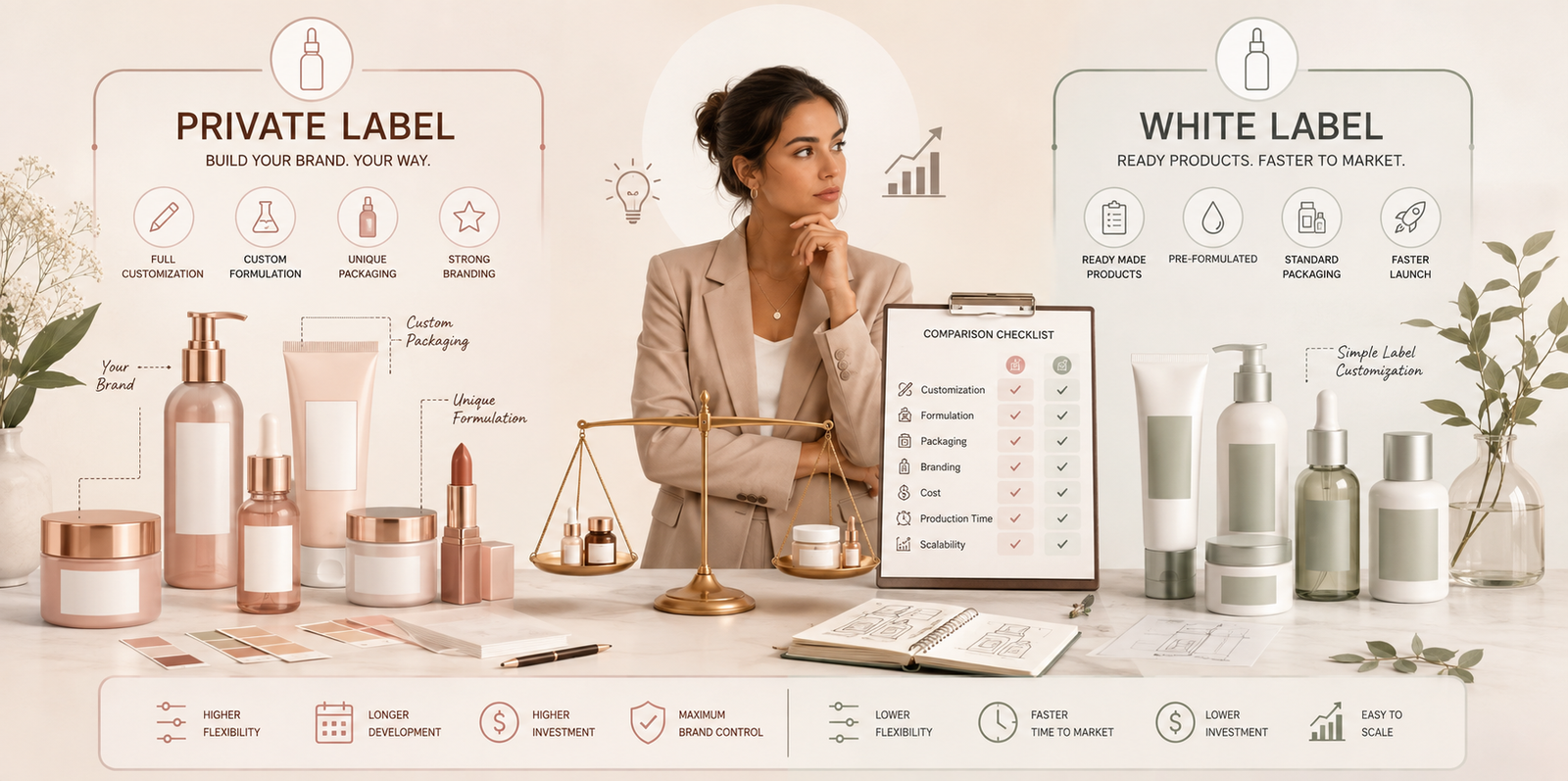
White Label: Uses a pre-tested, pre-approved inventory formula developed by the manufacturer. You simply customize the exterior packaging and label design, ensuring the fastest speed-to-market.
Custom Formulation: Involves working directly with R&D chemists to build a unique product recipe from scratch. This allows you to choose specific active percentages, unique textures, and custom regional fragrances.
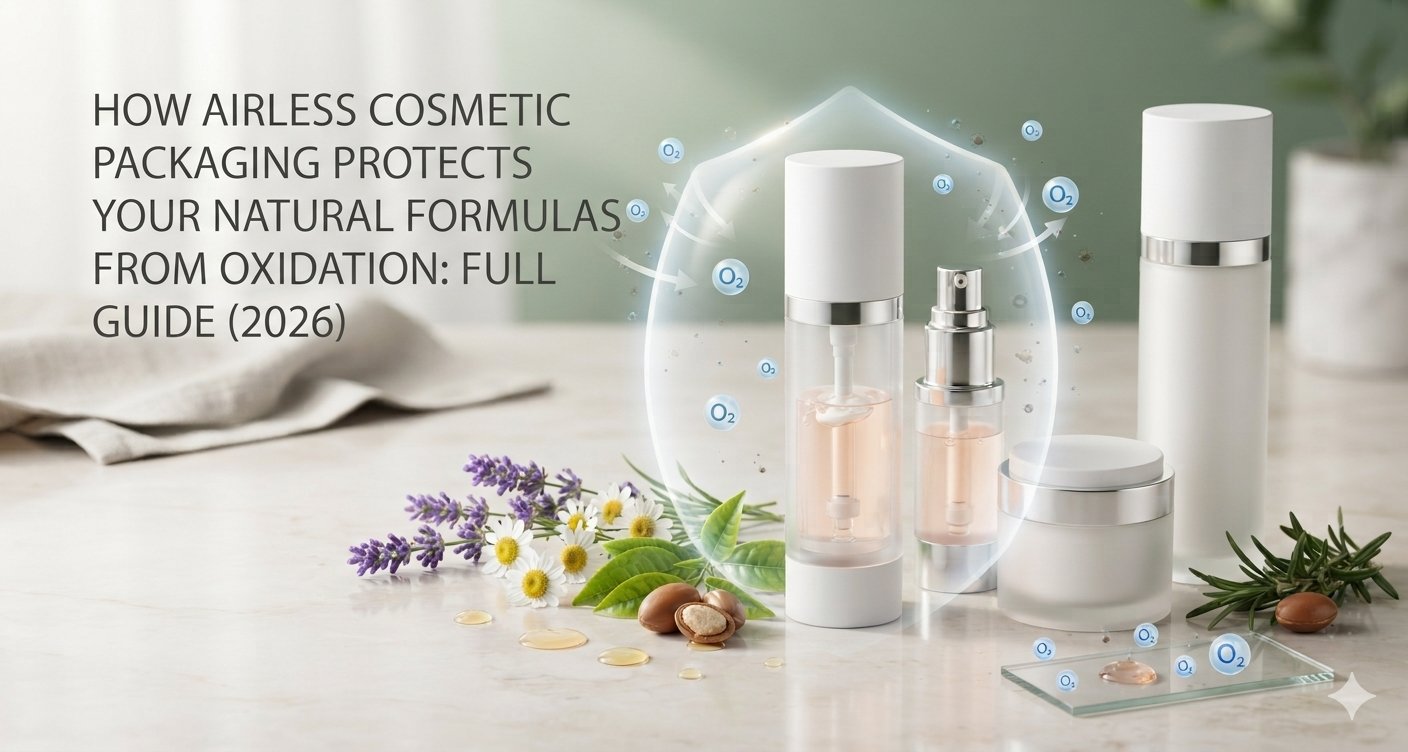
Sourcing bulk liquids from one supplier and pumps or bottles from another introduces high supply chain risks. Slight structural variances can result in product leaks, oxidation, or mechanical pump failures. A turnkey provider like Ashwani LLC tests the formulation inside the primary container before production, ensuring total physical and chemical compatibility.
According to recent industry analysis, skincare remains the market leader, specifically active-ingredient serums, barrier repair creams, and sweat-resistant sun protection. Hybrid color cosmetics (skincare-infused makeup) and trichological scalp therapies are also experiencing strong consumer demand.
