

Our Global export market
We provide our services all over the world. Where we can serve you ?
Contact Us
15 September 2026
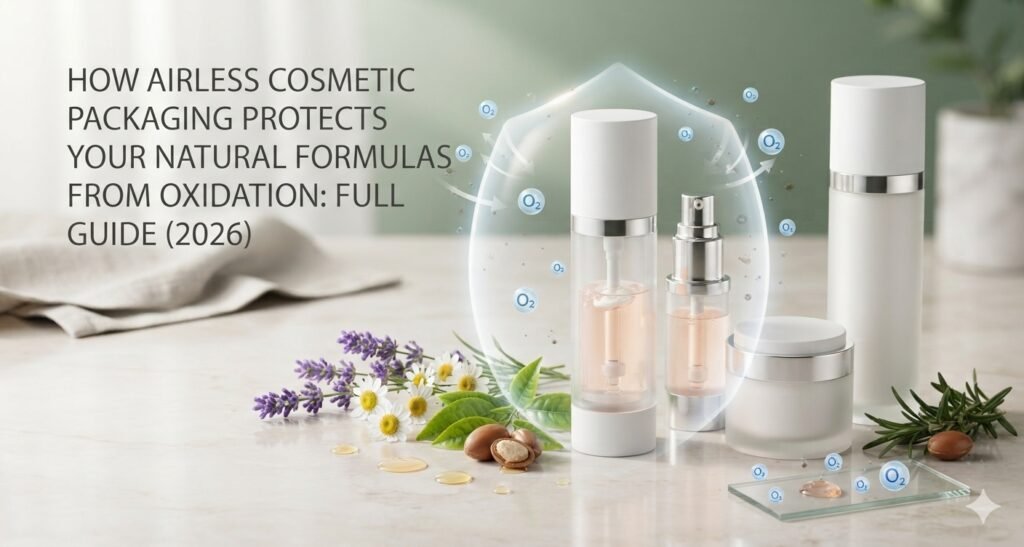
The clean beauty revolution has permanently altered how cosmetics are formulated, manufactured, and packaged. Modern consumers demand high-performance skincare free from synthetic parabens, formaldehyde releasers, and harsh stabilizers. In response, beauty brands are formulating with delicate botanical extracts, active peptides, essential oils, and highly volatile vitamins like pure L-ascorbic acid (Vitamin C) and retinol.
However, formulating clean beauty products is only half the battle. Without the proper containment strategy, these sensitive, preservative-free mixtures degrade rapidly once they leave the manufacturing floor. Traditional cosmetic packaging—such as open-mouth jars and standard dip-tube bottles—exposes products to atmospheric elements, skin bacteria, and ambient moisture. This consistent exposure triggers rapid oxidation and microbial contamination, ruining product efficacy and harming brand trust.
For B2B cosmetic brands, indie beauty founders, and skincare procurement managers, resolving this vulnerability is critical. This comprehensive guide details the science of product degradation and explains why advanced airless cosmetic packaging has become the industry standard for protecting natural formulas in 2026.
To understand the value of vacuum-sealed containment, brands must first understand the chemical process of oxidation. Oxidation occurs when oxygen molecules from the surrounding air interact with the chemical bonds of a cosmetic formulation. This interaction triggers a cascade of destabilizing effects:
Traditional pump bottles worsen this issue. Every time a standard lotion pump is pressed, a spring-loaded dip-tube draws fluid up while pulling external ambient air back down into the chamber to equalize pressure. This constantly introduces fresh oxygen and airborne contaminants directly into the remaining bulk supply.
Advanced airless cosmetic packaging bypasses the flaws of dip-tube systems entirely by utilizing a non-vented, hermetically sealed mechanical vacuum.
Instead of pushing a plastic straw into the liquid, airless structures place the formulation on top of a fitted internal platform or piston. This piston sits tightly against the interior walls of the cylinder container.
When a user presses down on the actuator pump, it creates a pressurized mechanical vacuum within the dispensing chamber. Instead of pulling air in to replace the lost volume, the drop in pressure draws the internal piston platform upward.
Because the system requires zero atmospheric air intake to function, no external air ever enters the chamber. The formula remains fully isolated from the first actuation to the very last drop, completely neutralizing the risk of environmental oxidation.
For brands distributing premium serums, fluid foundations, lightweight emulsions, and natural lotions, utilizing high-performance airless pump tubes and airless bottles provides a distinct competitive advantage.
Clean-label beauty brands struggle to balance clean ingredient lists with a viable retail shelf life. By creating an unbreachable physical barrier against external elements, an airless bottle or tube allows brands to minimize their reliance on synthetic chemical stabilizers. Formulations stay stable, non-reactive, and smooth over extended retail and distribution timelines.
Standard lotions packed in conventional squeeze tubes or dip-tube bottles leave up to 15% of the product trapped along the lower shoulders and interior walls. This structural waste frustrates consumers and lowers repurchase rates.
Conversely, the uniform upward pressure within a mono-material PP airless system enables near-perfect 100% product evacuation. Consumers extract every single drop efficiently, maximizing their perceived value and strengthening their loyalty to the brand.
While bottles and tubes work well for low-viscosity fluids, heavy anti-aging creams, rich night balms, and dense moisturizing masks require wide-access configurations. Historically, this meant using open-mouth cosmetic jars. However, standard jars present a massive hygiene hazard in the premium skincare market.
Every time a consumer dips their fingers into an open jar, they introduce ambient moisture, dust, and dermatological bacteria directly into the product pool. To eliminate this contamination risk, advanced packaging engineering introduced the airless jar.
Instead of exposing the entire surface area of the cream, an airless jar features a flat, hygienic actuator disc sitting directly above an internal floating piston.
Modern beauty consumers demand that luxury skincare matches their environmental values. Packaging manufacturers are actively moving away from complex multi-layered plastics that clog municipal waste streams, focusing instead on circular design solutions.
Historically, airless assemblies required internal metal springs and diverse plastic components, making them difficult to recycle. Today, industry leaders focus on mono-material PP systems. By manufacturing the actuator, piston, and outer bottle from a single plastic family, the entire empty package can be thrown directly into standard recycling bins without disassembly.
Refillable airless packaging pairs a reusable outer chassis (often made of heavy-walled glass or premium acrylic) with a lightweight, replaceable inner airless cartridge. Once the product is empty, the consumer replaces the inner cartridge while keeping the premium outer container. This approach reduces overall plastic consumption by up to 70% on subsequent purchases.
Navigating custom formulation, regulatory safety testing, and premium structural packaging require a reliable manufacturing partner. Ashwani LLC provides a streamlined, end-to-end B2B supply workflow under one roof to eliminate supply chain fragmentation.
As an ISO 9001 certified manufacturer and a government-recognized Star Export House, Ashwani LLC ensures all operations meet strict international export and safety standards.
By choosing Ashwani LLC as your primary supply partner, your brand gains access to premium, mono-material, and contamination-free packaging solutions that protect your active formulas and build long-term market authority.
The shift toward sustainable, high-performance skincare is no longer a temporary trend; it is the new benchmark for the global beauty industry. For brands utilizing delicate natural formulas, preserving ingredient purity while meeting environmental standards is essential for long-term survival. Traditional containers that allow air exposure and product degradation are quickly becoming obsolete.
Investing in advanced airless cosmetic packaging is the definitive way to protect your formulations from destructive product oxidation and consumer touch contamination. By choosing airless pump tubes, functional airless bottles, and hygienic airless jars, beauty brands guarantee maximum product freshness, optimal active potency, and zero product waste.
Partnering with an experienced, end-to-end B2B supply manufacturer like Ashwani LLC streamlines this transition. Our ISO 9001 certified manufacturing facilities, large production scale, and turnkey private labelling capabilities give your brand the infrastructure needed to deploy secure, mono-material, and premium packaging solutions that perform flawlessly on retail shelves worldwide.
The primary benefit is absolute protection from atmospheric oxygen and environmental elements. By utilizing a mechanical vacuum instead of a traditional dip-tube, airless cosmetic packaging prevents product oxidation, stabilizes active ingredients, and eliminates microbial contamination from finger contact.
A standard squeeze tube draws external air back inside when pressure is released, exposing the remaining product to oxygen and contaminants. An airless pump tube uses an internal piston mechanism that rises as the formula is dispensed, keeping the remaining supply vacuum-sealed and completely isolated.
Natural and organic formulas are typically rich in botanical extracts, volatile vitamins, and essential fatty acids, and they lack harsh synthetic chemical stabilizers or paraben arrays. When exposed to air, these natural ingredients oxidize quickly, causing discoloration, separation, and off-odors.
Yes. The mechanical vacuum platform inside an airless jar is explicitly engineered to handle high-viscosity formulations. It draws thick anti-aging creams and dense night balms upward smoothly, dispensing a precise micro-dose without clogging.
Modern sustainable airless packaging focuses heavily on mono-material Polypropylene (PP) resins. Because the entire container assembly belongs to a single plastic family, it can be processed efficiently through standard commercial recycling infrastructure without complex disassembly.
Traditional dip-tube bottles frequently leave up to 15% of the formulation stuck along the interior walls and lower corners. Advanced airless systems maintain uniform upward piston pressure, achieving near-perfect 100% product evacuation and eliminating consumer product waste.
Yes. The hermetically sealed, non-vented chamber does not rely on ambient atmospheric pressure. This specialized seal prevents leaks, spills, and weeping valves caused by altitude and pressure changes during long-distance transit or air travel.
Yes. Ashwani LLC provides comprehensive surface decoration services for bulk production runs. Brands can fully customize their containers with options like premium silk screening, hot stamping, custom color matching, and custom labeling to maintain a strong shelf presence.
We offer flexible production capabilities tailored to different operational needs. Our infrastructure handles bulk formulation batch distribution quantities ranging from 25 kg up to over 200 kg for base skincare stocks, supported by a large overall plant capacity.
It ensures the bulk formulation remains untouched by fingers throughout its entire lifecycle. Consumers appreciate the hygienic, micro-dosed delivery aperture, which reduces the risk of breakouts caused by contaminated cream and confirms the brand’s commitment to quality.
