

Our Global export market
We provide our services all over the world. Where we can serve you ?
Contact Us
20 August 2026
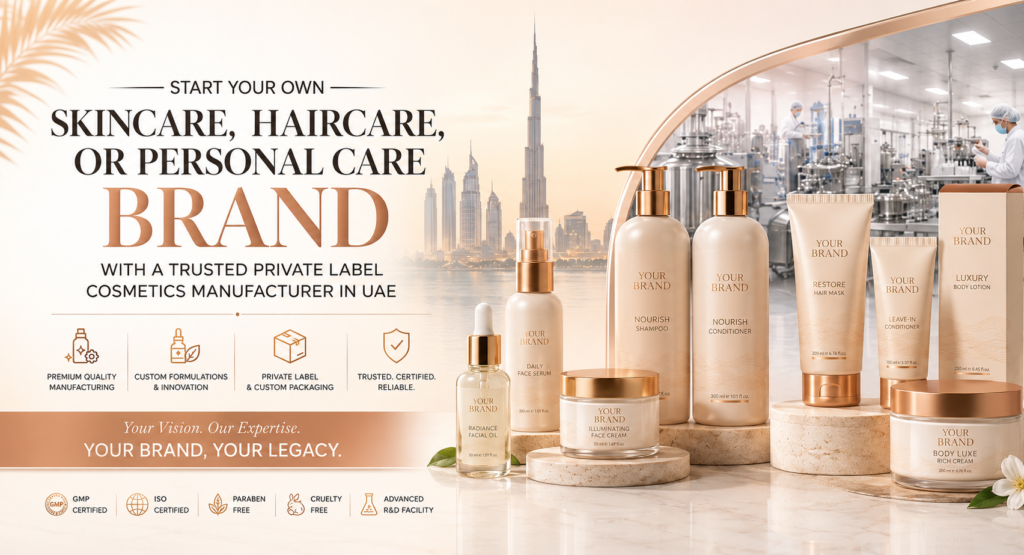
Starting your own skincare, haircare, or personal care brand can be an exciting business opportunity, but turning an idea into high-quality, market-ready products requires the right manufacturing support. From product formulation and ingredient selection to packaging, quality control, and production, managing everything independently can be time-consuming and expensive. This is where a trusted Private Label Cosmetics Manufacturer in UAE can make the process easier.
With private label manufacturing, you can create products under your own brand without investing in a dedicated manufacturing facility. Whether you are a startup, retailer, beauty entrepreneur, or established business looking to expand your product range, choosing the right manufacturing partner can help you bring your ideas to market more efficiently.
Ashwani LLC supports businesses looking to develop and launch beauty, skincare, personal care, essential oil, and wellness products with private label and customized manufacturing solutions. By combining product development, quality-focused manufacturing, and packaging support, Ashwani LLC helps entrepreneurs focus on what matters most—building a recognizable brand, reaching the right customers, and growing their business.
In this guide, we’ll explore how to choose a Private Label Cosmetics Manufacturer in UAE, develop your product line, create effective branding and packaging, and build a strong foundation for long-term success.
Private label cosmetics manufacturing is a business model where a specialized manufacturer produces beauty and personal care products that are sold under another company’s brand name. Instead of establishing your own factory, purchasing manufacturing equipment, hiring production staff, and managing the entire production process, you partner with a manufacturer that already has the necessary facilities, expertise, and resources.
Depending on the manufacturer and your business requirements, private label cosmetics can involve ready-made formulations, customized formulations, or product development based on a specific concept. You can typically select products, ingredients, fragrances, textures, packaging, sizes, and branding elements to create a product range that matches your target customers and market positioning.
For entrepreneurs, working with a Private Label Cosmetics Manufacturer in UAE can reduce the complexity of launching a beauty business. Instead of focusing on building manufacturing infrastructure, you can concentrate on developing your brand, marketing your products, understanding customer needs, and expanding your sales. This makes private label manufacturing a practical option for startups as well as established businesses looking to introduce new skincare, haircare, or personal care products.
Starting a beauty brand in the UAE can be an attractive opportunity for entrepreneurs because the country’s beauty and personal care market is supported by strong consumer demand, eCommerce adoption, premium product preferences, and a diverse customer base. Recent industry research highlights continued growth across skincare, cosmetics, fragrances, and personal care, while online shopping has become an important channel for discovering and purchasing beauty products.
For entrepreneurs, a Private Label Cosmetics Manufacturer in UAE can make entering this market more practical. Instead of investing heavily in a dedicated factory, production equipment, and manufacturing infrastructure, you can work with an established manufacturing partner to create products under your own brand. This allows you to direct more attention toward product positioning, packaging, marketing, customer acquisition, and business development.
Working with a Private Label Cosmetics Manufacturer allows entrepreneurs to build their own beauty brand without taking on the complexity of establishing and managing a manufacturing facility. Instead of investing heavily in production equipment, laboratories, skilled staff, and manufacturing infrastructure, businesses can use an established manufacturer’s capabilities while concentrating on branding, marketing, sales, and customer relationships.
Private label manufacturing can help reduce the time required to take a product from concept to market. Depending on the manufacturer, businesses may choose from existing formulations or work on customized products rather than developing every formulation completely from the beginning. This can make it easier to respond to market demand and introduce new products efficiently.
Building a cosmetics manufacturing facility requires considerable investment in equipment, premises, raw materials, quality-control systems, storage, and personnel. Partnering with a Private Label Cosmetics Manufacturer in UAE can reduce the need for this infrastructure. Entrepreneurs can allocate more of their budget toward product development, packaging, website creation, marketing, and customer acquisition.
Experienced manufacturers bring technical knowledge and established production processes to the project. They can support areas such as formulation, ingredient selection, production, filling, packaging, and quality control. This expertise can be especially valuable for startups that may not have an in-house cosmetics development or manufacturing team.
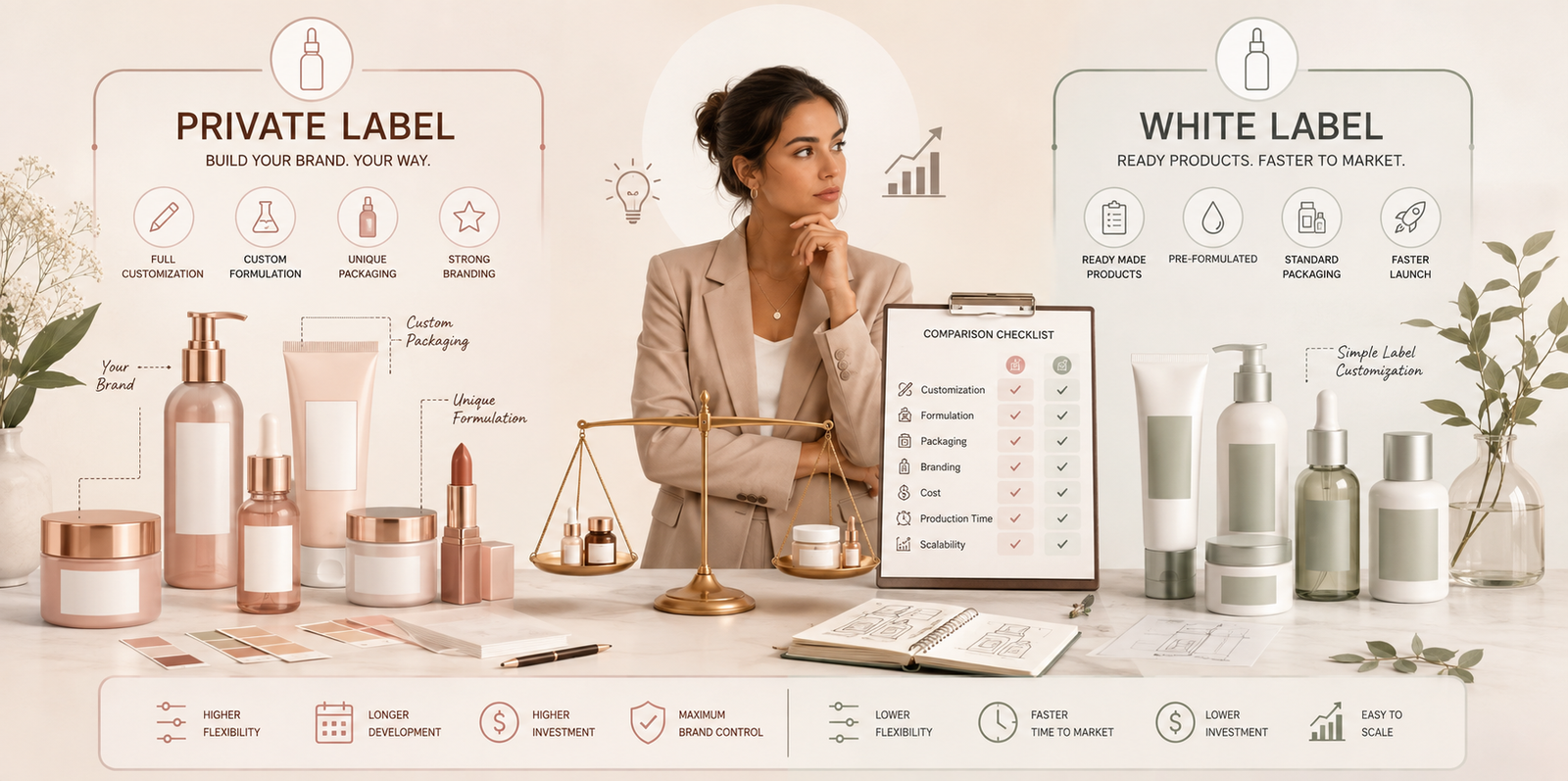
Private labeling doesn’t always mean selling a completely standard product. Depending on the manufacturer’s capabilities, businesses may be able to customize formulations, fragrances, textures, packaging, product sizes, and other elements. Customization gives brands greater flexibility to create products that align with their target audience and positioning.
Packaging plays an important role in how customers perceive a beauty brand. A private label manufacturer may offer different bottles, jars, tubes, pumps, boxes, labels, and other packaging solutions. Businesses can select packaging that matches their brand identity, product category, price point, and customer expectations.
Manufacturing can consume significant time and resources when managed internally. By outsourcing production, entrepreneurs can focus on the customer-facing aspects of their business, including brand strategy, SEO, social media, eCommerce, advertising, influencer partnerships, and customer service. This allows the business owner to spend more time building awareness and generating sales.
Private label manufacturing can provide flexibility as your business develops. A brand can begin with a focused selection of products and increase production as customer demand grows. This can be more practical than investing in a complete manufacturing setup before the business has established consistent sales.
Once your initial products gain traction, you can explore complementary categories. For example, a skincare brand could expand into haircare, bath and body products, essential oils, or other personal care products. Working with a manufacturer that supports multiple categories can make this expansion more convenient.
Choosing a Private Label Cosmetics Manufacturer in UAE can also make communication and supply-chain coordination easier for businesses operating in the country. A local manufacturing partner can provide a better understanding of the regional business environment while supporting production and packaging requirements.
For entrepreneurs working with Ashwani LLC, private label solutions can provide access to product categories such as skincare, personal care, essential oils, bath and body care, and wellness products. This allows businesses to explore opportunities for developing their own branded product lines while focusing on long-term brand growth.
Choosing the right product category is one of the first and most important decisions when building a beauty brand. Instead of launching a large number of products at once, start by identifying a specific customer need and selecting products that fit your brand’s purpose. Think about your target audience, their preferences, purchasing habits, budget, and the type of beauty or personal care products they are already looking for.
Skincare is a popular category for brands focused on everyday beauty and self-care. You could begin with products such as cleansers, moisturizers, serums, facial oils, masks, or body lotions. If your audience is more interested in hair maintenance and grooming, haircare may be a better direction, with options such as shampoos, conditioners, hair oils, masks, and scalp-care products.
Personal care and bath & body products can also provide opportunities to create a broader lifestyle-focused brand. Products such as body washes, scrubs, hand creams, lotions, and bath products can complement a skincare or wellness collection. If your brand focuses on relaxation and aromatherapy, you could also explore essential oils, carrier oils, diffuser products, and related wellness offerings.
When working with a Private Label Cosmetics Manufacturer in UAE, ask about available formulations, customization options, minimum order quantities, packaging choices, testing, production timelines, and product documentation. A manufacturer such as Ashwani LLC can help businesses explore beauty, personal care, essential oil, and wellness product categories based on their brand requirements.
Before developing products, it is important to understand who you want to sell to. A clear target audience helps you make better decisions about product selection, formulation, packaging, pricing, marketing, and sales channels. Instead of creating products for everyone, focus on a specific group of customers whose needs and preferences align with your brand.
Start by identifying the demographic characteristics of your potential customers, such as age group, gender, location, income level, and lifestyle. For example, a skincare brand targeting young professionals in the UAE may prioritize convenient, easy-to-use products and modern packaging, while a premium beauty brand may focus on customers who value sophisticated formulations and luxury presentation.
Next, understand your customers’ beauty and personal care needs. Research the problems they are trying to solve, the products they currently use, and the factors that influence their purchasing decisions. Customers may be looking for everyday skincare, haircare solutions, premium self-care products, natural-inspired formulations, wellness products, or convenient personal care options. This information can help you develop a product range with a clear purpose.
Choosing the right manufacturer is one of the most important decisions you’ll make.
Don’t select a partner based solely on price.
Make sure the manufacturer can produce the categories you need.
If you plan to launch skincare today and add haircare and body care later, choose a partner with capabilities across multiple categories.
Some UAE manufacturers offer skincare, haircare, body care, fragrance, and personal care production under one manufacturing operation.
Find out whether the manufacturer provides:
A manufacturer with R&D and formulation expertise can be particularly valuable when you want products differentiated from standard catalog offerings.
Quality consistency is essential for a beauty brand.
Ask about:
For example, some UAE manufacturers advertise GMP and ISO 22716-based manufacturing systems and multi-stage quality checks.
Always verify certifications and documentation directly with your prospective manufacturing partner.
Minimum order quantity, or MOQ, determines the smallest production quantity a manufacturer will accept.
MOQs can vary significantly depending on:
Some manufacturers advertise startup-friendly programs, while others require larger production runs.
For a new brand, choose an initial production volume that balances customer demand with available capital.
Avoid purchasing excessive inventory before you’ve established product-market fit.
Packaging is an important part of the customer experience.
Your packaging should:
Potential packaging options include:
Some UAE private label manufacturers provide packaging selection, label customization, filling, and packaging as part of their manufacturing services.
Regulatory planning should happen before production, not after.
Cosmetic products sold in the UAE may be subject to requirements relating to product documentation, labeling, testing, conformity, and registration depending on the product and market.
For example, Sharjah Municipality’s published health requirements for cosmetics and personal care products include label information such as trade name, producing or packaging entity, country of origin, contents, net weight, method of use, and batch number.
Requirements can differ depending on the emirate, product classification, claims, and route to market. Therefore, confirm the current requirements with the relevant authority and your manufacturer or regulatory specialist before launching.
Avoid making unsupported medical or therapeutic claims on cosmetic products.
Never rely only on a manufacturer’s product catalog.
Request samples before committing to a large production run.
Evaluate:
For customized products, sample approval should be a formal stage in your development process.
Document the approved formula, packaging specifications, artwork, and other important details before mass production.
Once your products are ready, your website becomes your digital storefront.
Important pages include:
Each product page should contain original information about:
Avoid simply copying manufacturer descriptions. Original content helps create a stronger brand voice and provides more value to customers.
A successful product launch requires a marketing strategy.
Use platforms such as Instagram, Facebook, Pinterest, TikTok, and LinkedIn according to your audience.
Share:
Collaborate with relevant beauty and wellness creators.
Prioritize audience relevance and engagement over follower count alone.
A smaller creator with a highly relevant UAE audience may provide more value than a large account with limited relevance to your product category.
Build an email database and use it to communicate:
Email marketing can help convert first-time buyers into repeat customers.
A new brand doesn’t necessarily need to be the cheapest option.
Instead, develop a strong value proposition.
You could differentiate through:
Customers need a clear reason to choose your brand.
Launching with a focused collection is often more practical than introducing 20 or 30 products immediately.
For example, a skincare brand could start with:
Once you identify your best-performing products, you can expand into additional categories.
This approach can reduce inventory risk and provide useful customer feedback before larger investments are made.
For entrepreneurs looking for a Private Label Cosmetics Manufacturer in UAE, Ashwani LLC provides private label and manufacturing solutions across beauty, wellness, personal care, essential oils, bath and body care, and related product categories.
The company’s solutions can help businesses develop a branded product portfolio while avoiding the need to manage their own manufacturing infrastructure.
Potential services include:
For startups and established businesses alike, having a manufacturing partner can simplify production and allow more attention to be directed toward branding, marketing, distribution, and customer growth.
Launching Too Many Products: Start with a focused collection and expand based on demand.
Choosing the Cheapest Manufacturer: Price should be evaluated alongside quality, service, documentation, production capabilities, and reliability.
Ignoring Packaging: Generic packaging can make it difficult to establish a memorable brand.
Skipping Product Samples: Always evaluate samples before committing to large-scale production.
Ignoring Regulatory Requirements: Determine applicable requirements before manufacturing and selling products.
Using Unsupported Claims: Be careful with claims relating to medical conditions, treatment, prevention, or guaranteed results.
Neglecting Customer Feedback: Reviews, enquiries, and repeat-purchase data can reveal which products your customers value most.
The beauty industry continues to evolve, creating opportunities for entrepreneurs who can respond to changing consumer expectations.
Some areas worth watching include:
Sustainable Beauty: Customers are increasingly interested in responsible packaging, recyclable materials, refill concepts, and environmentally conscious product choices.
Personalized Beauty: Consumers increasingly expect products and experiences that feel relevant to their individual preferences.
Wellness and Beauty Integration: Skincare, personal care, aromatherapy, and wellness are increasingly interconnected, creating opportunities for brands that offer complete self-care experiences.
eCommerce-First Brands: Digital-first beauty businesses can reach customers without relying exclusively on traditional retail.
The strongest opportunities will likely come from combining quality manufacturing with distinctive branding and a strong digital customer experience.
Starting your own skincare, haircare, or personal care line doesn’t require you to build and operate a factory. A trusted Private Label Cosmetics Manufacturer in UAE can provide the manufacturing expertise, product development capabilities, packaging support, and production infrastructure needed to turn your business concept into a market-ready product line.
However, choosing a manufacturer is only one part of the journey. Successful brands also require clear positioning, quality products, attractive packaging, regulatory planning, SEO, digital marketing, and excellent customer service.
The smartest approach is to start with a focused product range, understand your target audience, test your products, gather customer feedback, and scale based on real market demand.
For UAE entrepreneurs, private label manufacturing offers a practical path to entering the beauty and personal care market while keeping the focus on what ultimately makes a brand successful: quality, differentiation, customer trust, and consistent value.
A private label cosmetics manufacturer produces beauty and personal care products that businesses sell under their own brand names. Services may include formulation, production, packaging, labeling, and quality control.
Yes. Private label manufacturing allows you to outsource production to an established manufacturer rather than investing in your own factory.
Depending on the manufacturer’s capabilities, you can develop skincare, haircare, bath and body care, personal care, cosmetics, essential oils, fragrances, and wellness products.
Evaluate product quality, formulation capabilities, testing, certifications, packaging options, MOQ, production capacity, documentation, communication, and regulatory support.
Yes. It can reduce the infrastructure and technical requirements involved in launching a product business and allows startups to concentrate on branding and marketing.
